
Imagine filling a shopping cart to the brim with exciting purchases, only to walk away at the last minute. This happens online all the time – to nearly 70% of potential customers, in fact! Shopping cart abandonment is the silent killer of e-commerce conversions, costing businesses billions each year.
But what exactly drives this frustrating phenomenon, and more importantly, what can be done to stop it? Understanding shopping cart abandonment statistics is crucial for any online retailer striving to maximize sales and improve the customer experience.
In this article, we’ll delve into the latest data surrounding this pervasive issue, uncovering the key reasons why shoppers abandon their carts, and arm you with actionable insights to recapture lost revenue and turn those abandoned carts into completed sales.
Get ready to unlock the secrets behind cart abandonment and transform your online store’s performance!
Shopping Cart Abandonment Statistics: Understanding & Recovering Lost Sales
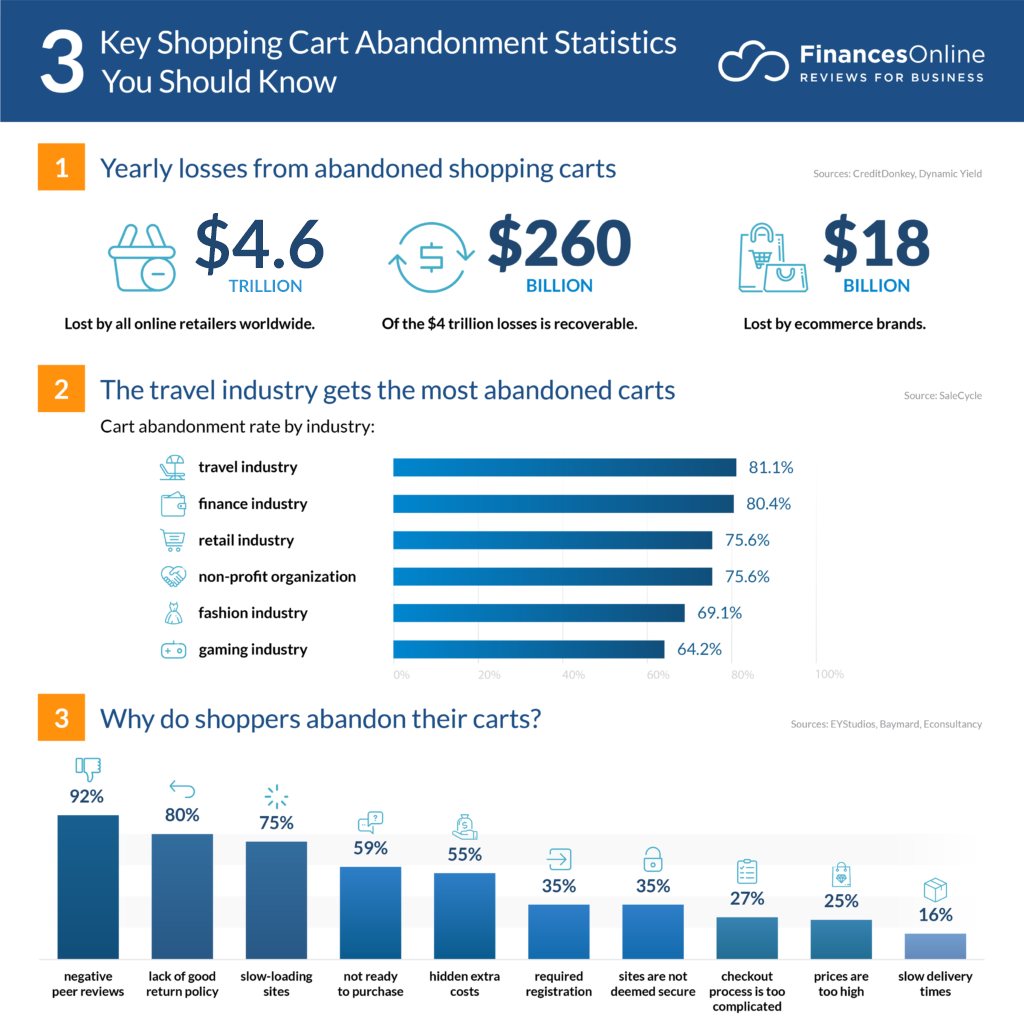
What is Shopping Cart Abandonment?
Ever added items to an online shopping cart, then changed your mind before completing the purchase? That’s shopping cart abandonment. It’s a very common issue for e-commerce businesses.
Essentially, it represents potential revenue left on the table. Numerous shoppers navigate through the beginning steps of the buying venture, adding merchandise but not quite finishing the transaction.
This phenomenon is a significant obstacle for online retailers. A high abandonment rate can greatly impact profitability. Identifying reasons behind it is crucial for optimizing the checkout process.
Understanding this behavior allows e-commerce stores to pinpoint friction points. Addressing these pain points can substantially boost conversion rates. Ultimately leading to a rise in completed transactions.
The Average Shopping Cart Abandonment Rate
The average shopping cart abandonment rate is, surprisingly, pretty high. It typically hovers around 70%, meaning roughly seven out of ten shoppers don’t follow through with their purchases.
This number can fluctuate based on diverse factors. These include industry, device used (mobile vs. desktop), and the complexity of the checkout procedure.
Understanding that rate is not just a number, it’s a key metric. This data provides valuable insights into customer behavior and potential areas for enhancement within the sales funnel.
While 70% is average, strive to reduce yours. Small percentage improvements can translate into large revenue gains. Optimizing the online shopping experience is an ongoing process.
Reasons Why Customers Abandon Their Carts
Unexpected shipping costs are a major culprit. Customers are frequently deterred when they reach checkout and discover additional fees they weren’t anticipating earlier in the process.
A complex or lengthy checkout is another frequent reason. Requiring shoppers to fill out excessive forms or navigate through too many pages can be off-putting and lead to abandonment.
Security concerns also play a role. Shoppers need reassurance that their payment details are safe. A lack of trust signals can deter people from completing their purchases.
The absence of preferred payment options can be a showstopper. If customers can’t use their chosen method (e.g., PayPal, specific credit card), they might look for alternative retailers.
Also, some shoppers might be merely window shopping, or plan on buying later. They may want to comparison shop before committing to a purchase. Others are saving items for future purchase.
Shopping Cart Abandonment Rate by Industry
Abandonment rates vary significantly across different sectors. For instance, the finance industry often sees lower rates due to the serious nature of transactions.
Conversely, the fashion industry often experiences high rates. This is due to factors such as size uncertainty and the impulse-driven nature of many purchases.
Understanding these industry-specific benchmarks is essential. It allows businesses to benchmark their own performance. Then also identify relevant optimization strategies.
Travel companies often see increased rates as users comparison shop for the best deals. This means the user will add to cart, check prices, and compare.
Strategies to Reduce Shopping Cart Abandonment
Transparent pricing is key. Display all costs (including shipping and taxes) upfront. This eliminates nasty surprises and builds trust with your shoppers.
Simplify the checkout process as much as possible. Reduce the number of steps and fields required. Enable guest checkout options for those who don’t want to create an account.
Build trust by displaying security badges and secure payment logos. Offer a variety of payment options to cater to your diverse customer base.
Implement a shopping cart abandonment email campaign. This automated effort reminds customers of items left in their carts. Provide incentives, such as free shipping or a discount, to encourage completion.
Optimize your site’s speed and mobile experience. A slow website or one that isn’t mobile-friendly can lead to frustration and abandoned carts.
